
You just got your blood report back. There are 20 rows of numbers, most of them flagged with an H or an L. The doctor’s clinic is already closed. You open Google and within four minutes you are convinced something is seriously wrong as you have no idea how to read blood test report.
Sound familiar?
You are not alone. Every day, thousands of Indians collect their blood reports from labs and diagnostic centres — and walk out with a sheet of paper they cannot fully interpret. The numbers are there. The reference ranges are there. But the gap between “what does this mean for me, specifically” and “what the report says” is enormous.
This guide is designed to answer the question how to read blood test report ?
We will walk through the five most common blood panels ordered in India — the CBC, LFT, KFT, lipid profile, and HbA1c — explain what each test measures in plain language, tell you what the H and L flags actually mean, and help you know when to be genuinely concerned versus when to take a breath.
By the end, you will be able to sit across from your doctor and have a real conversation about your results. Not just nod.
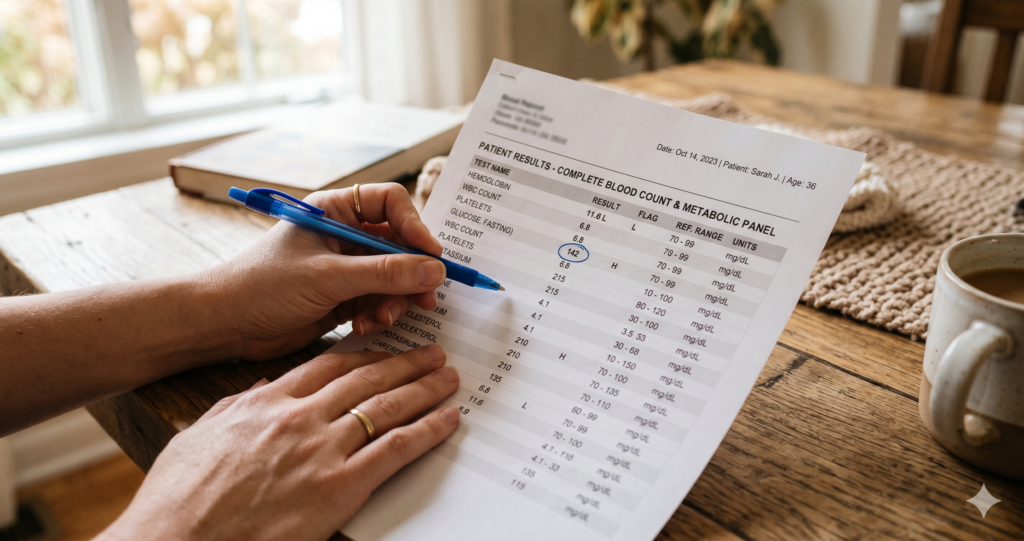
What the H and L Flags Actually Mean
Before we look at individual tests, let’s address the thing that causes the most anxiety: those red H and L letters next to your values.
H means your result is above the upper limit of the reference range. L means your result is below the lower limit.
Here is what most people do not realise: a flag does not automatically mean something is wrong. Reference ranges are calculated from large population studies — they represent the middle 95% of healthy people. This means that even in a perfectly healthy person, roughly 1 in 20 values will fall outside the range by pure statistical chance.
A single H or L in isolation, especially a mild one just outside the range, is almost never a cause for alarm. What matters far more is context: your age, your symptoms, your history, and — critically — how the value compares to your previous reports.
This is precisely why keeping your old blood reports matters. A doctor who can see that your haemoglobin has been slowly declining over three years can act on that trend. A doctor who only has today’s report sees only a number. (If your old reports are scattered across WhatsApp folders and paper files, this guide on organising your medical records is a good place to start.)
The Five Blood Panels — Explained Simply How To Read Blood Test Report
1. CBC — Complete Blood Count
The CBC is the most commonly ordered blood test in India. It gives your doctor a picture of the three types of cells in your blood: red blood cells, white blood cells, and platelets. This will help you better understand how to read blood test report.
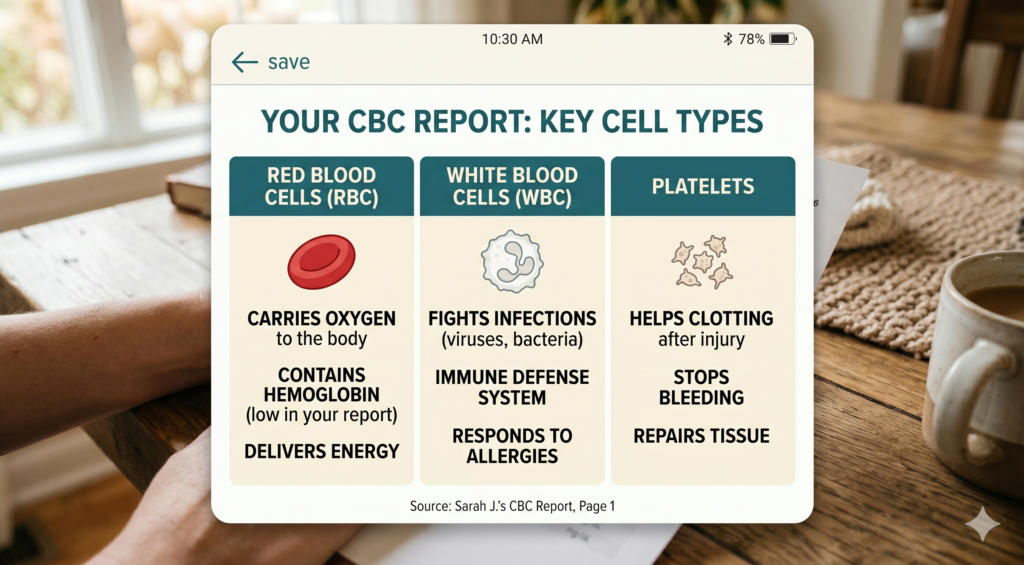
Key values in your CBC and what they mean:
Haemoglobin (Hb) This measures how much oxygen-carrying protein is in your red blood cells. Low haemoglobin is the most common finding in Indian blood reports — particularly in women — and is often a sign of iron deficiency anaemia.
Normal range for Indian adults:
- Men: 13.0 – 17.0 g/dL
- Women: 12.0 – 15.0 g/dL
A value flagged L here, especially if you feel tired, breathless, or have been experiencing hair fall, warrants a follow-up conversation with your doctor and ask how to read blood test report.
WBC — White Blood Cell Count White blood cells are your immune system. A high WBC count can indicate your body is fighting an infection. A very low count may suggest the immune system is suppressed. A mild elevation — especially without symptoms — is often nothing to worry about.
Normal range: 4,000 – 11,000 cells/µL
Platelets Platelets help your blood clot when you get a cut. Very low platelets (below 1,00,000) need immediate medical attention. Mildly low or mildly high values in the absence of symptoms are usually not emergencies.
Normal range: 1,50,000 – 4,00,000 cells/µL
2. LFT — Liver Function Test
The LFT checks how well your liver is working. Your liver is responsible for filtering toxins, producing proteins, and helping digest food. These tests measure enzymes and proteins that give clues about liver health.
Key values and what they mean:
SGPT / ALT (Alanine Aminotransferase) This enzyme is found primarily in liver cells. When liver cells are damaged — by alcohol, fatty liver, certain medications, or infection — ALT leaks into the blood and the value rises. This is one of the most sensitive indicators of liver stress.
Normal range: 7 – 56 U/L (up to 40 U/L is ideal)
A mildly elevated ALT (up to twice the upper limit) is common in people with fatty liver disease — increasingly prevalent in urban India. It is worth discussing with your doctor but is rarely an emergency on its own.
SGOT / AST (Aspartate Aminotransferase) AST is found in both the liver and the heart muscle. Elevated AST alongside elevated ALT usually points to the liver. If AST is high but ALT is normal, the heart or muscles may be involved.
Bilirubin (Total) Bilirubin is a yellow pigment produced when red blood cells are broken down. High bilirubin can cause jaundice (yellowing of the skin and eyes). It can be a sign of liver disease, bile duct problems, or certain blood disorders.
Normal range: 0.2 – 1.2 mg/dL
Albumin A protein made by the liver. Low albumin over time suggests the liver’s protein-making function is impaired. This is usually significant only in the context of chronic liver disease.
3. KFT — Kidney Function Test
The KFT (also called RFT — Renal Function Test) measures how well your kidneys are filtering waste from your blood. This is especially important for people with diabetes or high blood pressure, as both conditions can slowly damage the kidneys over time.
Key values and what they mean:
Creatinine Creatinine is a waste product produced by muscle activity. Healthy kidneys filter it efficiently. A rising creatinine level is one of the earliest signs that kidney function is declining.
Normal range for Indian adults:
- Men: 0.7 – 1.2 mg/dL
- Women: 0.5 – 1.0 mg/dL
Important: Creatinine values are influenced by muscle mass. A very muscular person may have naturally higher creatinine without any kidney problem. Your doctor will look at the trend over time, not just a single reading.
Blood Urea Nitrogen (BUN) Another waste product filtered by the kidneys. Elevated BUN alongside elevated creatinine is more concerning than either value alone.
eGFR — Estimated Glomerular Filtration Rate This is a calculated value (not directly measured) that estimates how much blood your kidneys filter per minute. Many modern reports now include it automatically.
- Above 90: Normal kidney function
- 60–89: Mildly reduced — monitor
- Below 60 (consistently): Chronic kidney disease — needs specialist review
4. Lipid Profile — Cholesterol Panel
The lipid profile measures the fats circulating in your blood. It is one of the most important tests for assessing heart disease risk — a significant concern given that India has one of the highest rates of cardiovascular disease in the world.
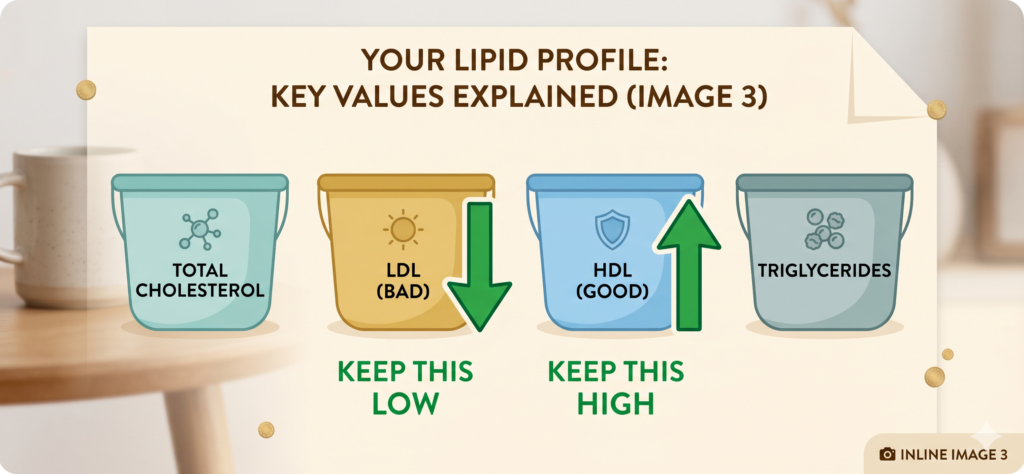
Key values and what they mean:
LDL Cholesterol — “The Bad One” LDL deposits cholesterol in artery walls, contributing to blockages. Lower is better.
Target for most adults: Below 100 mg/dL If you have diabetes or existing heart disease: Below 70 mg/dL
HDL Cholesterol — “The Good One” HDL carries cholesterol away from the arteries and back to the liver for processing. Higher is better. Low HDL is a risk factor for heart disease even if total cholesterol is normal — a pattern very commonly seen in Indians.
Target: Above 40 mg/dL for men, above 50 mg/dL for women
Triglycerides These are fats stored in your fat cells and circulated in the blood after meals. High triglycerides — often caused by excess refined carbohydrates, sugar, and alcohol — increase heart disease risk.
Normal: Below 150 mg/dL High: Above 200 mg/dL
Total Cholesterol A combined measure. In isolation it is less useful than the individual components. A ratio of Total Cholesterol to HDL below 5.0 is considered healthy.
5. HbA1c — The Three-Month Sugar Story
HbA1c is one of the most important — and most misunderstood — tests in an Indian blood report. Unlike a fasting blood sugar test (which shows your sugar level at one moment in time), HbA1c reflects your average blood sugar over the past two to three months.
Think of it this way: fasting blood sugar is a photograph. HbA1c is a three-month film.
What the numbers mean:
| HbA1c Value | What It Means |
|---|---|
| Below 5.7% | Normal — no diabetes risk |
| 5.7% – 6.4% | Pre-diabetes — lifestyle changes needed |
| 6.5% and above | Diabetes — requires medical management |
| Below 7.0% (if diabetic) | Well-controlled diabetes |
| Above 8.0% (if diabetic) | Poorly controlled — risk of complications |
HbA1c is particularly important for Indians because we carry a higher genetic susceptibility to Type 2 diabetes — and develop it at lower body weights than Western populations. If your fasting blood sugar is borderline, ask your doctor how to read blood test report and specifically for an HbA1c to get the fuller picture.
When Should You Be Genuinely Concerned?
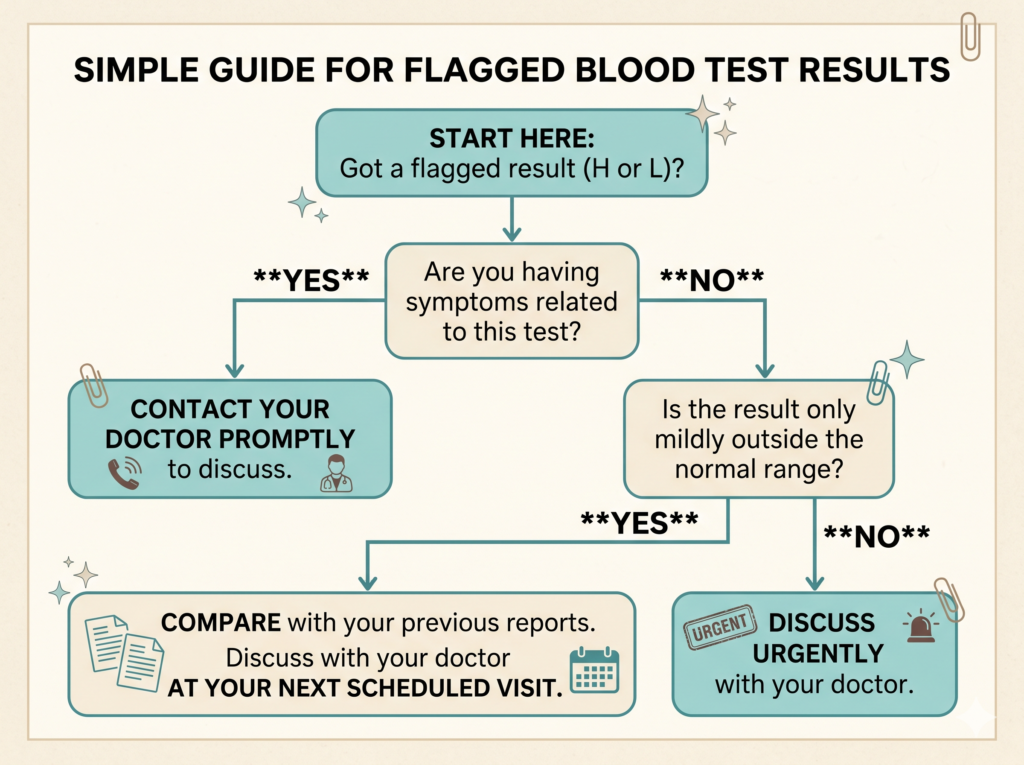
Mild, isolated H or L flags without symptoms are usually not emergencies. Here are the situations where you should contact your doctor promptly rather than waiting for your next scheduled appointment:
Contact your doctor within 24–48 hours if:
- Haemoglobin is below 8.0 g/dL
- Platelet count is below 1,00,000 cells/µL
- Creatinine has risen significantly from your previous test
- HbA1c is above 9.0% for the first time
- Bilirubin is significantly elevated alongside symptoms of jaundice (yellow eyes, dark urine)
Seek immediate care if:
- Platelet count is below 50,000 cells/µL
- Any value comes with severe physical symptoms — chest pain, shortness of breath, severe weakness, confusion
For most other flagged values: note them, bring your previous reports for comparison, and discuss at your next appointment. A good doctor will always interpret values in the context of your full health picture — not in isolation.
Questions to Ask Your Doctor at Your Next Appointment
Walking into a consultation with prepared questions changes the quality of care you receive. Here are the ones that matter most when discussing how to read blood test report :
- “Which of these flagged values are you most concerned about — and which can we monitor over time?” This helps separate the urgent from the routine.
- “How does this compare to my report from last year?” If your doctor doesn’t have your old reports, bring them. (This is exactly why keeping your health records organised matters — you can read more about how to do that here.)
- “Is this value influenced by anything I did before the test?” Fasting status, recent exercise, dehydration, and certain medications can all affect results.
- “What would you like to retest — and how soon?” A single abnormal result is often confirmed with a repeat test before any action is taken.
- “Are there lifestyle changes that would specifically help this value?” For many flagged markers — LDL, triglycerides, blood sugar, haemoglobin — diet and exercise changes can make a meaningful difference.
- “Should I be sharing this report with any other specialist?” Sometimes a GP will want a cardiologist, endocrinologist, or nephrologist to review specific panels.
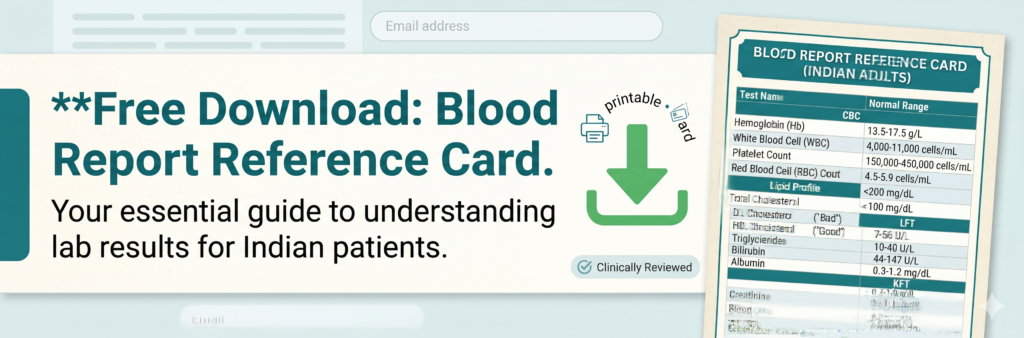
Quick Reference: Normal Ranges for Indian Adults
| Test | Normal Range (Indian Adults) |
|---|---|
| Haemoglobin | Men: 13–17 g/dL · Women: 12–15 g/dL |
| WBC Count | 4,000–11,000 cells/µL |
| Platelet Count | 1,50,000–4,00,000 cells/µL |
| SGPT / ALT | 7–56 U/L |
| SGOT / AST | 10–40 U/L |
| Bilirubin (Total) | 0.2–1.2 mg/dL |
| Albumin | 3.5–5.0 g/dL |
| Creatinine | Men: 0.7–1.2 mg/dL · Women: 0.5–1.0 mg/dL |
| eGFR | Above 90 = Normal |
| LDL Cholesterol | Below 100 mg/dL (ideal) |
| HDL Cholesterol | Men: Above 40 · Women: Above 50 mg/dL |
| Triglycerides | Below 150 mg/dL |
| Total Cholesterol | Below 200 mg/dL |
| HbA1c | Below 5.7% (non-diabetic) |
| Fasting Blood Sugar | 70–100 mg/dL |
Note: Reference ranges can vary slightly between laboratories. Always interpret your values against the ranges printed on your specific report, and in consultation with your doctor.
One Last Thing Before Your Next Test
A blood report is not a verdict. It is a data point — one piece of information in a much larger picture that includes your symptoms, your history, your lifestyle, and your genetics.
The most powerful thing you can do with your blood report is not to Google every flagged value in a panic. It is to keep it, store it safely alongside your other health records, and bring it with you every time you see a doctor — so that over time, a real picture of your health can emerge from the pattern. This is how to read blood test report and help others at it
If your reports are currently scattered across your phone, your email, and a drawer somewhere, here is a simple guide to getting them organised — it takes less than a weekend and gives you a level of preparedness that most people never have.
Your blood has been telling your story for years. Now you can start reading it.
Pingback: Easily Managing Your Parents Health Records: A Practical Guide for Busy Caregivers - Vital Sense